Understanding the Basics of Materials
A wiping rag is a small purchase with a direct effect on everyday work. If it struggles to pick up liquid, leaves fibres behind or is awkward to handle, a simple cleaning task can take longer than it should.
Choosing industrial wiping rags starts with understanding the job. A cloth for wiping grease from tools may need different characteristics from one used to clean a smooth surface before its next production step.
The aim is to find a grade that delivers the required result consistently, at a sensible cost.

Start with what you need to clean
Before comparing products, write down three things: what you are removing, what surface you are cleaning and how clean that surface needs to be.
Water, oil, grease and loose dirt create different demands. Surface texture matters too. A rough component may put more strain on the fabric, while a smooth finished surface may make even a few remaining fibres noticeable.
Be specific about the result. “Clean enough for routine maintenance” and “ready for a finishing process” are different requirements. For coating or other sensitive processes, follow the process supplier’s wiping-material requirements.
This gives you a useful starting point:
| Main task | Characteristics to prioritise |
|---|---|
| Everyday wiping of tools and work areas | Practical piece size, durability and value |
| Picking up routine liquid spills | Absorption speed and liquid-holding capacity |
| Cleaning smooth surfaces | Low lint release and a suitable surface finish |
| Wiping awkward shapes and smaller parts | Flexibility, manageable thickness and usable dimensions |
Use this as a shortlist, then check the actual product on your task.
Look at absorbency and handling together
An absorbent rag should pick up the liquid you work with and remain manageable during use. Consider both how quickly it absorbs and how much it can hold before another piece is needed.
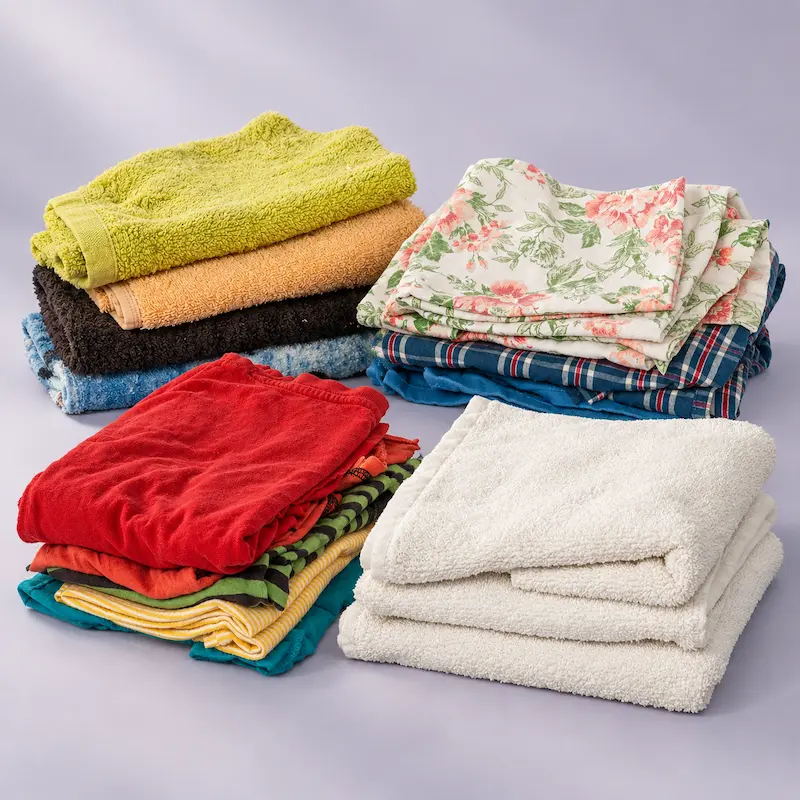
Terry cloth is worth considering for absorbent wiping. Its looped structure contributes to liquid uptake, as explained by the National Cotton Council. However, a thicker cloth may be awkward when cleaning a narrow recess or a small component.
A thinner, more flexible fabric may suit those jobs better. The useful comparison is how the rag performs in your hand, on your surface, with your liquid.
Avoid choosing by fabric name alone. Ask what the grade contains and how much variation to expect in thickness, texture and size.
Decide how much lint your task can tolerate
Lint is particularly relevant when fibres left behind would require another cleaning pass or interfere with the next operation.
A low-lint grade is a logical option to evaluate for these tasks. However, the label should not be treated as a promise that no fibres will ever be released. Check the finished surface under the lighting and inspection conditions your team normally uses.
For routine maintenance, a general-purpose grade may already meet the required standard. There is little value in buying a more specialised product for a job that does not benefit from its extra characteristics.
Check piece size and usable material
Two packs with the same weight can contain different numbers and sizes of pieces. That changes how convenient they are to use.
Very large pieces may be cumbersome for detail work. Small pieces may be awkward for broad surfaces. Thick seams, narrow strips or unsuitable sections can also affect how much of a pack your team can use for a particular task.
Ask about the usual size range and inspect several pieces. If employees spend time searching through a pack for a suitable rag, include that in your evaluation.
Consider more than one grade
A business can have several wiping requirements within the same working day.
For example, a workshop might evaluate a general-purpose grade for tools and routine cleaning, an absorbent grade for liquid pickup, and a low-lint grade for specific surface work. A marine maintenance team may have a similar mix of tasks.
Start with the smallest range that covers your needs. Clearly label supplies by task so employees can select the intended grade without guesswork.
Make the bulk order fit your operation
Once you have identified suitable grades, consider how you will receive, store and distribute them.
Confirm pack weight, delivery charges, available order quantities and the product specification. Estimate consumption from normal working periods, allowing for busier weeks rather than basing the order on one unusually quiet day.
Keep a short purchasing brief: the task, required finish, preferred piece size, estimated consumption and any process-specific requirements. This makes it easier to request comparable quotes and reorder the right material.
Find a suitable grade with Texscale
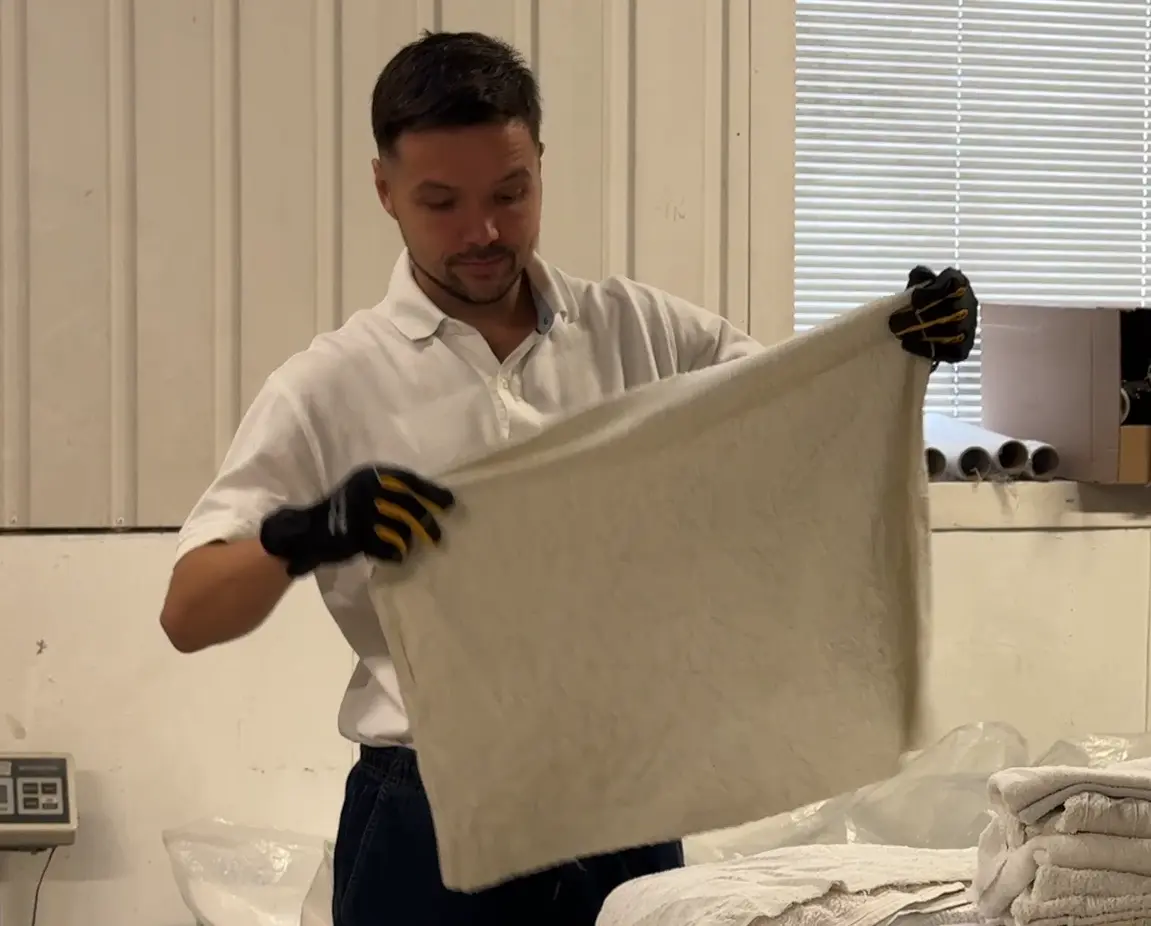
Texscale supplies general-purpose, highly absorbent and low-lint wiping rags, with material cut, checked and compressed into 10 kg packs for wholesale supply.
Tell us what you need to clean, the result you need and your expected quantity. We can help you identify a suitable grade and prepare a quote with packaging and delivery options.