How Reclaimed Wiping Rags Can Help Reduce Waste
One way to reduce the material demand of everyday wiping is to use fabric that has already served another purpose.
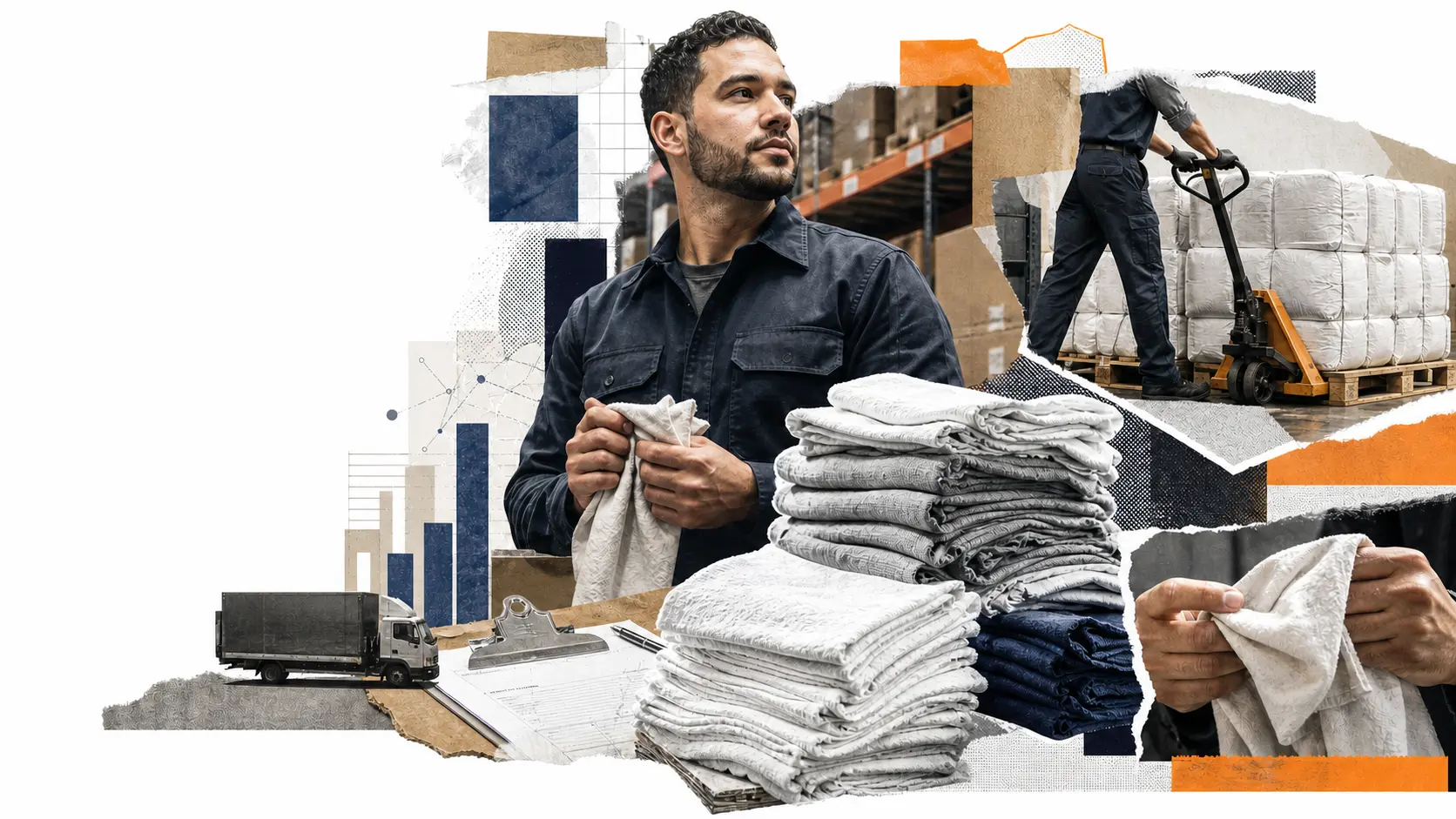
A T-shirt, bed sheet or towel that is no longer suitable for its original use can still contain strong, absorbent fabric. Turning that material into a wiping rag gives it another practical job for a workshop, factory, garage or maintenance team. When it replaces a newly manufactured wipe, it can also reduce demand for new material.
That is the simple idea behind reclaimed wiping rags: keep useful material working for longer.
The environmental cost begins long before a cloth reaches your workbench
Every new textile starts with raw materials. Cotton requires land, water and agricultural inputs. Virgin polyester generally begins with fossil-based feedstocks. Fibers then have to be spun, made into fabric, dyed or finished, cut, packaged and transported.
Those stages add up. The European Environment Agency reports that textile consumption ranked fifth on average among 12 household consumption categories in the EU when raw-material use, greenhouse-gas emissions, water use and land use were compared for 2022. The European Commission also estimates that about five million tonnes of clothing are discarded in the EU each year—around 12 kilograms per person.
A reclaimed rag starts later in the chain because its fabric already exists. Sorting and cutting are not impact-free, but the material does not need to be grown or manufactured again specifically for its second application. When the rag genuinely replaces a new wipe, that avoided production is where much of the environmental benefit can come from.
Wearable clothes first, wiping rags next
Circularity works best as a sequence. Clothing that is still wearable should remain in clothing use for as long as practical. This preserves the greatest value and usually delivers the strongest environmental benefit.
When an item is no longer suitable for wear, however, usable sections of fabric may still be ideal for cleaning. Converting them into wiping rags keeps the textile in productive use before final disposal, without first breaking the fabric down and remanufacturing its fiber.
It is already an established route: the European Commission’s Joint Research Centre reports that converting apparel and home textiles into cleaning rags and insulation materials currently dominates textile recycling in the EU.
That sequence—re-wear first, then useful material recovery, with disposal last—reflects the logic of the EU waste hierarchy. It also reflects a major review of 45 textile life-cycle assessment studies, which found that practices extending textile service life generally produced the lowest impacts.
Where the environmental benefit comes from
1. Existing fabric gets a useful second application
Cutting suitable second-hand textiles into rags preserves the fabric in its current form. There is no need to break it down into fiber and manufacture a new cloth from the recovered material.
2. A reclaimed rag can replace a newly made wipe
This is the most important condition. A reclaimed rag starts with material that has already been produced for another purpose. If it replaces a paper, nonwoven or virgin-textile wipe, it can reduce demand for new wiping material as well as the waste associated with it.
The comparison must be functional: it should account for the type and quantity of wipes needed to complete the same cleaning task.
3. The right material can reduce unnecessary use
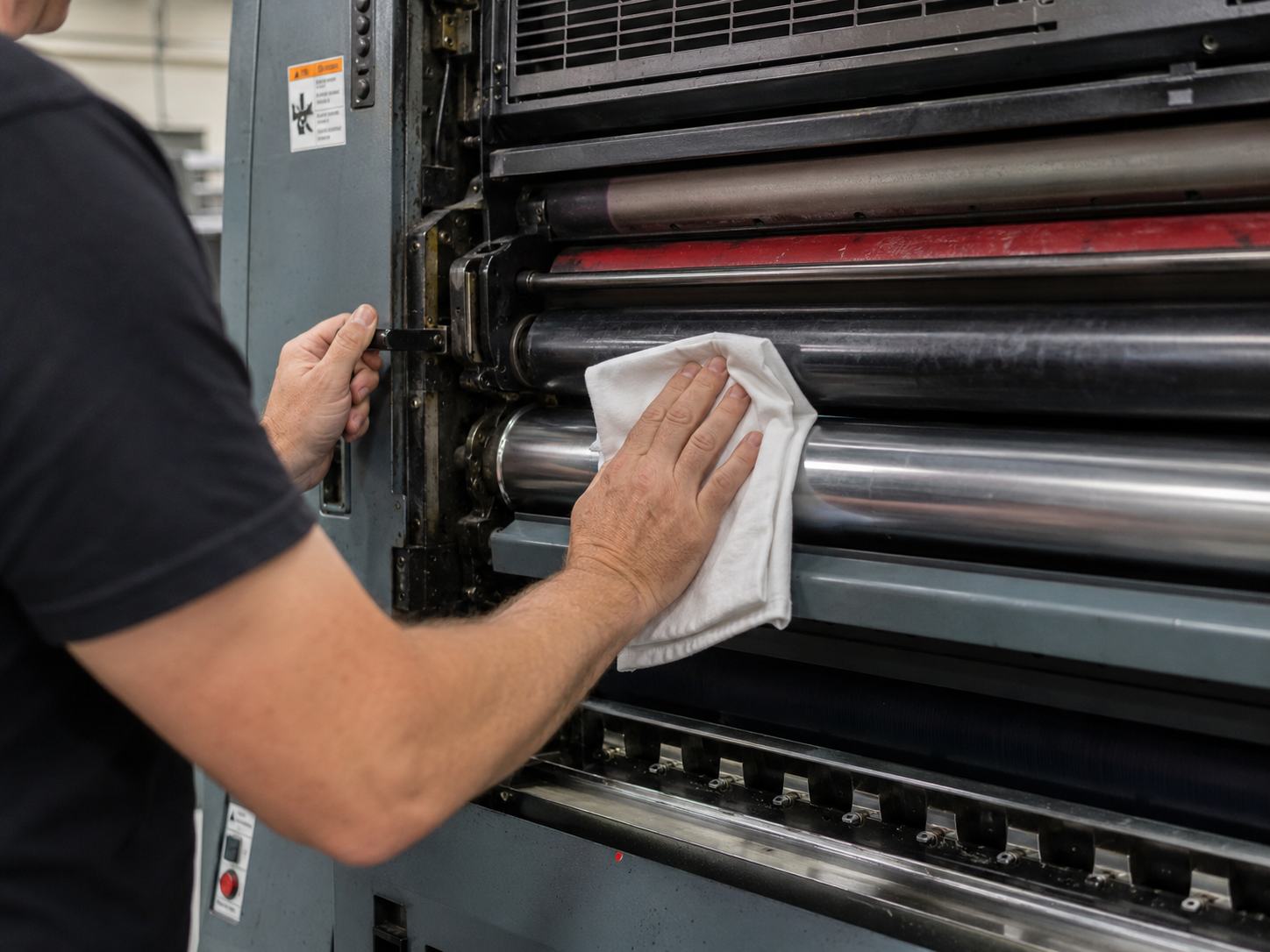
A smooth cotton rag, a flexible bed-sheet rag and an absorbent terrycloth rag do not perform the same job. Matching the cloth to the task helps teams use wiping material efficiently instead of reaching for several unsuitable wipes.
4. Safe repeat use can increase the benefit
For tasks where workplace procedures allow it, a rag may handle more than one wipe before it is finished.
If laundering is suitable for the substance absorbed—and permitted by the safety data sheet, workplace risk assessment and applicable wastewater rules—washing can extend its service further. Its environmental benefit still depends on the avoided new wipes outweighing the energy, water, detergent, transport and wastewater impacts of laundering.
Contaminated rags should never be reused or washed through an uncontrolled route.
What does the research say about clothing-to-rag systems?
The evidence is encouraging, but it also shows why precise wording matters.
A peer-reviewed Japanese life-cycle study modeled used cotton clothing converted into industrial wipers. It included cutting and reprocessing in the Philippines plus sea transport in both directions.
Compared with producing the same mass of new cotton wipers, the model estimated a saving of 3.27 kilograms of CO₂ equivalent per kilogram of used clothing processed.
That number is a study result, not a universal footprint for every wiping rag. It depends on the reclaimed wiper replacing a newly manufactured cotton wipe with the same function. Different fiber mixes, transport routes, processing methods and replacement rates will change the result.
An Australian life-cycle study reached a similar overall conclusion. Among the apparel-recycling routes it assessed—cleaning wipes, recycled cotton fiber, insulation and polyester feedstock—the cleaning-wipe route produced the greatest environmental benefit in that study.
The benefit came from both avoiding landfill impacts and avoiding production of the product being replaced.
Broader reviews support the same principle. A 2018 review of 41 studies found strong overall evidence that textile reuse and recycling generally reduce impacts compared with incineration or landfill, with the largest gains usually coming from avoided new production.
A 2024 review of 45 life-cycle studies also found that direct reuse generally performs better than recycling and highlighted transport, processing yield, use patterns and the amount of virgin production displaced as key variables.
These studies demonstrate potential environmental benefits under their stated assumptions—but the displacement of a newly made wipe must be real.
A lower-waste choice, not an impact-free one
Responsible sustainability claims should include the full picture. Reclaimed wiping rags offer the clearest benefit when:
- wearable garments have been kept in clothing use first;
- each rag replaces a newly manufactured wiping product;
- material and size are matched to the cleaning task;
- deliveries and packaging are managed efficiently;
- laundering, where safe and appropriate, uses efficient equipment and follows contaminant-specific workplace and wastewater requirements; and
- used rags are handled according to the substance they have absorbed.
Transport deserves particular attention. A recent life-cycle study of post-consumer textile management in the Czech Republic found that logistics could strongly affect the result. This is why transport distance and vehicle efficiency belong in the calculation.
End-of-life handling matters as well. Under the EU List of Waste, wiping cloths contaminated by hazardous substances fall under hazardous entry 15 02 02*, while other wiping cloths fall under 15 02 03.
Always follow local waste rules, workplace procedures and the relevant safety data sheet for segregation, safe temporary storage and collection rather than placing every used rag in the same waste stream. Businesses operating in Finland can also consult the country’s official hazardous-waste guidance; requirements elsewhere may differ.
How Texscale gives textiles a practical second life
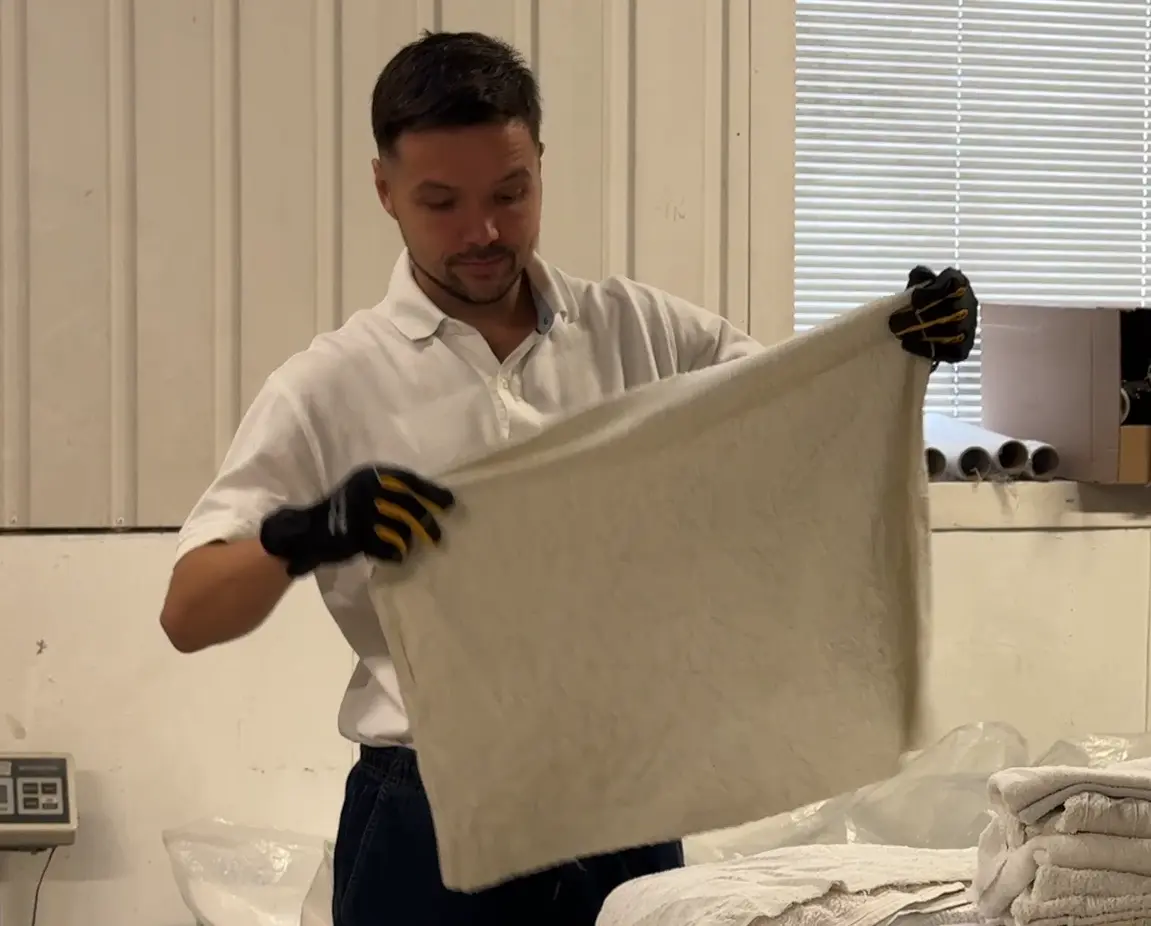
At Texscale, suitable second-hand clothing and household textiles are individually cut, inspected and sorted by material and color. This lets customers choose a wiping rag that fits the work:
- standard cotton for versatile everyday wiping;
- bed-sheet rags for soft, flexible cleaning and polishing;
- towel and terrycloth rags for absorbency and larger spills; and
- mixed-cotton rags for durable general-purpose tasks.
The finished rags are quality-checked and compressed into compact 10 kg packs for convenient handling and storage.
It is a straightforward process with a practical result: existing textile material is turned into a useful industrial wiping product.
A small purchasing choice that supports a more circular system
No cleaning product has zero impact. But choosing reclaimed wiping rags can be a meaningful way to reduce demand for newly manufactured wiping material, make use of textiles that already exist and support a more circular approach to industrial cleaning.
The key is to choose the right rag, use it efficiently and handle it responsibly after the job is done.
Explore Texscale wiping rags and find the material that best suits your cleaning tasks.
Sources and further reading
- European Environment Agency, Circularity of the EU textiles value chain in numbers (2025).
- European Commission, EU Strategy for Sustainable and Circular Textiles.
- European Commission, Waste Framework Directive overview.
- Semba, T. et al., Greenhouse Gas Emission Reductions by Reusing and Recycling Used Clothing in Japan, Sustainability 12(19), 8214 (2020).
- Moazzem, S. et al., Environmental impact of discarded apparel landfilling and recycling, Resources, Conservation & Recycling 166, 105338 (2021).
- Sandin, G. and Peters, G. M., Environmental impact of textile reuse and recycling: A review, Journal of Cleaner Production 184, 353–365 (2018).
- Abagnato, S., Rigamonti, L. and Grosso, M., Life cycle assessment applications to reuse, recycling and circular practices for textiles: A review, Waste Management 182, 74–90 (2024).
- European Commission Joint Research Centre, Techno-scientific assessment of the management options for used and waste textiles in the European Union (2023).
- Vavrušová, L. A. and Krejčová, A., Environmental assessment of sorted textile waste management scenarios in Eastern Bohemia using life cycle assessment, Journal of Material Cycles and Waste Management 28, 2497–2510 (2026).
- European Commission, EU List of Waste, entries 15 02 02* and 15 02 03.
- Suomi.fi, Hazardous waste: guidance for businesses operating in Finland.