Which One is Worth It?
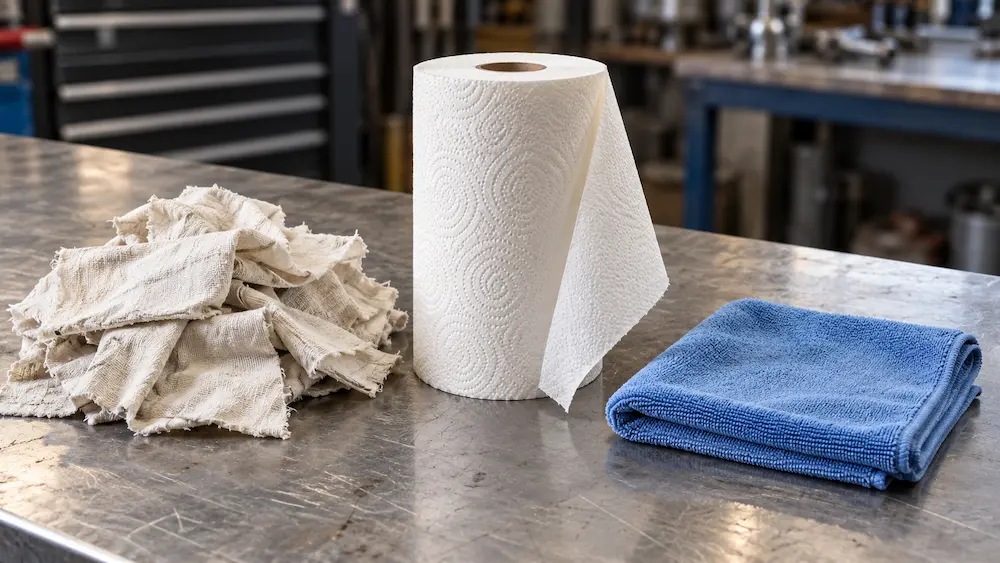
Cotton rags, paper towels and microfibre cloths can all have a place in a workshop. The best choice depends on what you are removing, the surface you are cleaning and the result the job requires.
For dirty mechanical work, cotton rags can be a practical option. Industrial paper wipers may suit convenient single-use wiping. Dedicated microfibre cloths can suit selected finishing and routine cleaning tasks.
A workshop will often benefit from a combination, with each material assigned to suitable work.
Start with the cleaning task
Before comparing prices, ask:
- Is the contamination oil, grease, water, dust or something else?
- Is the surface robust, coated or sensitive to abrasion?
- Does the task have a specific fibre or residue requirement?
- Can a cloth be reused through an approved cleaning process?
- How will the used wiping material be handled?
These questions matter more than choosing one material for the entire business.
| Cleaning task | Material to consider first | What to check |
|---|---|---|
| Routine grease removal from ordinary hand tools | Suitable cotton rags | Tool and cleaner compatibility |
| Liquid pickup on compatible benches | Absorbent towel or terry rags | Volume, contamination and spill procedure |
| Quick, light wiping | Industrial paper wipers | Strength and consumption during the actual task |
| Glass or suitable finished surfaces | A dedicated, approved microfibre cloth | Cleanliness, trapped grit and surface instructions |
| Precision tools, coating preparation or controlled processes | The specified wiping material | Required fibre, residue and chemical characteristics |
These are starting points. Manufacturer instructions and process requirements take priority.
Cotton wiping rags: useful for routine dirty work
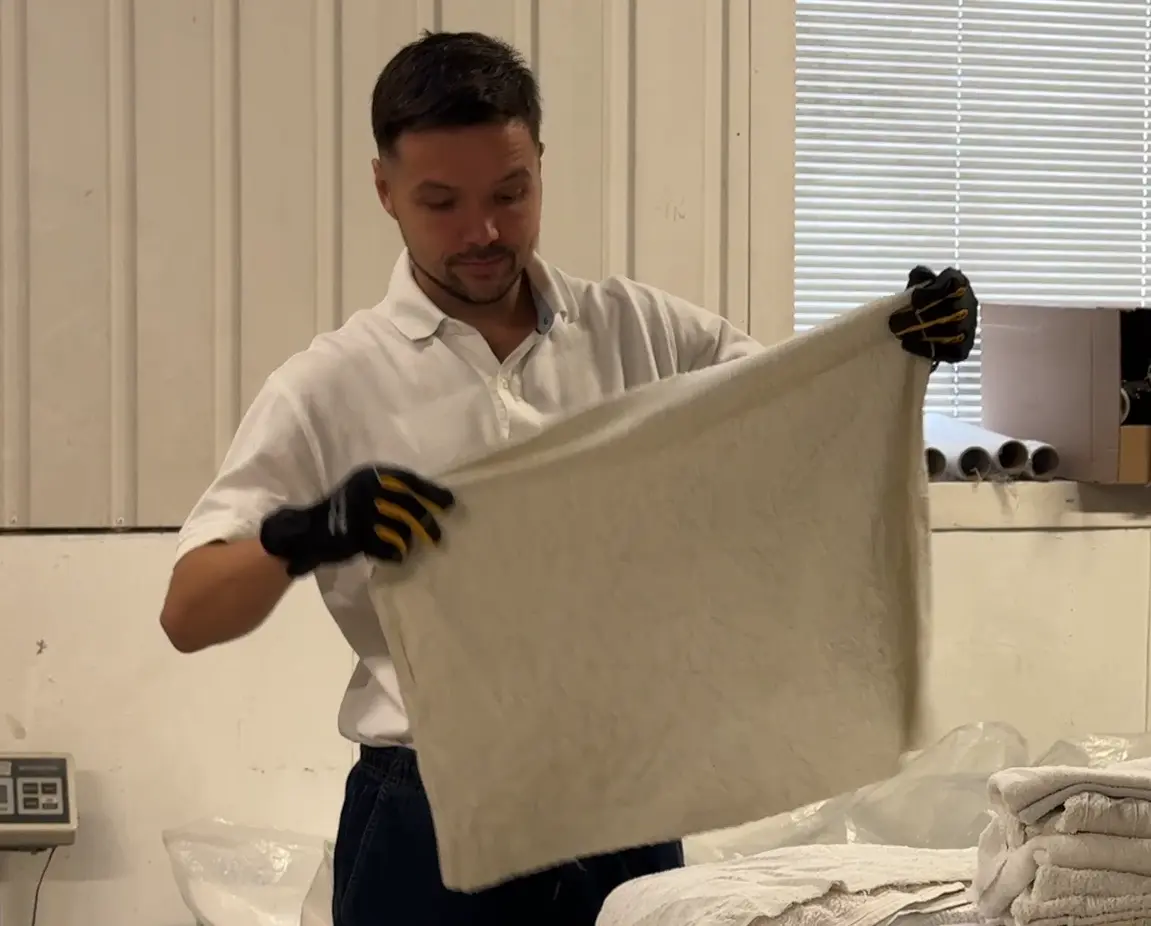
Cotton wiping rags can suit jobs where the main requirement is collecting ordinary oil, grease and dirt from compatible surfaces.
However, “cotton rags” describes a range of materials. Smooth woven fabric, knitted fabric and towel material can differ in thickness, texture and absorbency. Reclaimed textiles can also vary between pieces.
That makes grade selection important:
- General-purpose rags can suit everyday workshop wiping.
- Towel or terry material can suit liquid pickup.
- Lower-lint material may be appropriate when loose fibres are a concern, provided it meets the task’s requirements.
Texscale supplies general-purpose, absorbent and low-lint wiping rags.
Reclaimed material should be assessed for its intended use. Its origin alone does not establish chemical compatibility, a uniform finish or suitability for a precision process.
Paper towels: distinguish household paper from industrial wipers
Paper provides a convenient fresh wiping surface, but paper products are not all equivalent.
Ordinary household paper towels and industrial wiping paper can behave differently during a workshop task. For example, Tork Wiping Paper Plus is designed for industrial wiping and liquid pickup.
Paper may be useful when:
- The job involves light contamination.
- A fresh, single-use wipe is convenient.
- Dispensers help keep supplies organised.
- Reusable-cloth handling would add unnecessary work.
For wetter or rougher tasks, assess how many sheets are needed and whether the paper holds together adequately.
Also check what the product actually is. Some disposable workshop wipes are engineered nonwoven cloths rather than conventional paper. Their performance and price should be compared separately.
Microfibre: useful where dedicated cloths can be managed
Microfibre cloths can be a useful option for selected surface-cleaning and finishing tasks, particularly where the business can keep them clean and assign them to specific uses.
Washable, colour-coded products are available; Vileda Professional’s r-MicroTuff Base is one example.
A dedicated cloth can help prevent an oily workshop wipe from being used on glass or another finishing surface. Colour coding works only when staff understand the system and storage keeps the cloths separated.
Microfibre still needs careful handling:
- Check the surface manufacturer’s recommendations.
- Keep cloths containing grit away from sensitive finishes.
- Follow the cloth manufacturer’s laundering instructions.
- Confirm that any contamination can be handled by the available cleaning process.
Do not assume a washable cloth is economical for every oily job. Its cleaning, handling and replacement costs also matter.
Compare cost per completed job
Purchase price alone can be misleading.
Cotton rags may be sold by weight, paper by roll or sheet count, and microfibre by individual cloth. Those units do not directly show the cost of cleaning a tool or preparing a bench.
A more useful comparison is:
Cost per completed cleaning task = total attributable cleaning cost ÷ number of tasks completed to the required standard
Include:
- Wiping material consumed.
- Cleaning time.
- Relevant laundering and handling costs.
- Waste handling.
- Rework caused by an unacceptable result.
A cheap wipe that requires repeated cleaning may cost more per job. A more expensive cloth may also be unnecessary for rough, heavily contaminated work.
Run a small trial before changing supplies
Choose one recurring task, such as cleaning a greasy bench after a typical job.
Test only materials suitable for that surface and cleaning method. Keep the contamination, working area and required result reasonably comparable.
Record how much wiping material was used, how long the task took and whether the result was acceptable. Include any preparation, laundering or waste-handling work.
Repeat the comparison across several normal jobs. One unusually clean or dirty task can give a misleading result.
This produces evidence relevant to your workshop instead of relying on a universal claim that one material is always cheaper.
Frequently asked questions
Are low-lint cotton rags the same as lint-free wipes?
No. A lower-lint rag should not automatically be treated as a specified lint-free wipe. Precision tools and controlled processes may require a particular material. For example, TEKTON’s torque-wrench manual specifies a dry, lint-free cloth.
Can one cloth be used for every cleaning task?
Separate dirty mechanical wiping from finishing work and any task with specific cleanliness requirements. The contamination already on a cloth matters as much as its original material.
Are paper towels always cheaper than cotton rags?
There is no universal answer. Compare material consumption, time and waste costs for a completed job, rather than comparing a roll price with a price per kilogram.
Build a wiping system around your workshop
Choose supplies around the work your staff actually perform: dirty wiping, liquid pickup, quick disposable cleaning and finishing tasks.
For cotton wiping materials, tell Texscale about your cleaning requirements, expected quantity and delivery location. We can help you select a grade to assess against your workshop’s needs.