A Routine for Your Garage Workshop
A clean workshop is easier to work in when tools have a place, benches are ready for the next job and oil spills are dealt with promptly. The difficulty is maintaining that standard while vehicles, parts and people move through the space throughout the day.
A practical workshop cleaning checklist separates three things: cleaning during a job, resetting the workspace at the end of the day and carrying out deeper cleaning each week.
The following routine is a starting point for vehicle garages and maintenance workshops. Adjust it to your equipment, workload and site procedures.
Clean during the job, not only afterwards
Some cleaning tasks should happen immediately. An oil spill in a walkway cannot wait for the evening clean-up, and a bench covered in metal particles is a poor place to put newly cleaned components.
The UK Health and Safety Executive’s vehicle workshop guidance recommends preventing oil and grease spills, cleaning spills promptly, keeping gangways clear and putting equipment away.
During each job:
- Use suitable drip trays where fluids may escape.
- Deal with spills according to your workshop’s spill procedure.
- Keep leads, hoses, packaging and removed parts out of walking routes.
- Separate dirty components from cleaned parts.
- Remove loose debris before wiping a surface.
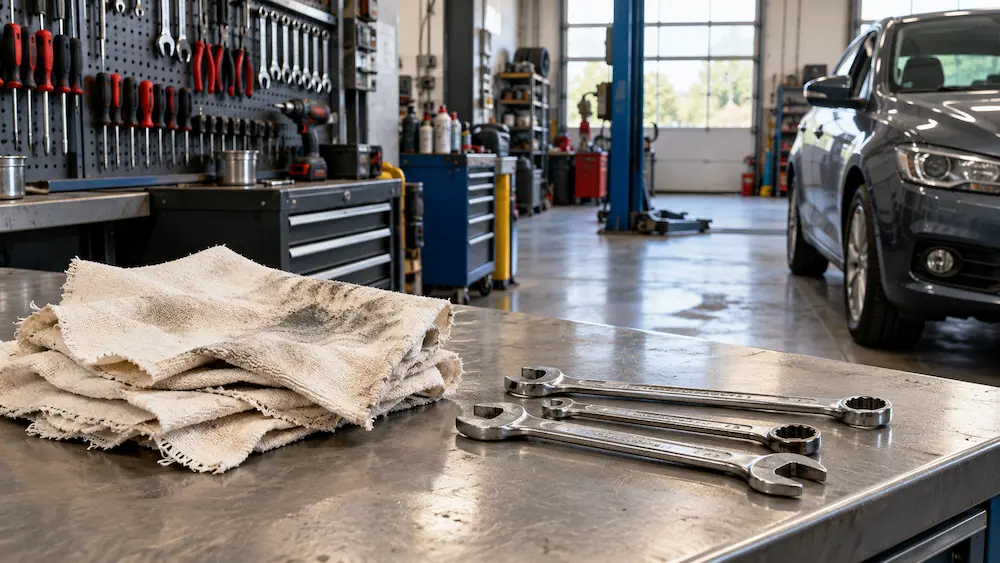
Wiping rags are useful for controlled clean-up of small amounts of oil and grease on tools and benches. Larger spills may require dedicated absorbents and other spill-control equipment. Wiping alone also may leave a slippery film, so the surface still needs an appropriate final clean.
Daily workshop cleaning checklist
The end-of-day clean should leave each work area ready for the next shift. Give every task an owner so that “someone will do it” does not become the default.
| Area | Daily task | What completion looks like |
|---|---|---|
| Workbenches | Remove waste, return parts to their assigned location and clean the working surface | Space is available for the next job |
| Hand tools | Remove routine dirt and contamination using the tool manufacturer’s instructions | Tools are clean enough to handle and stored correctly |
| Floors and walkways | Remove debris and address remaining contamination | Routes are clear and the floor is suitable for use |
| Cleaning supplies | Refill clean cloths, approved cleaners and other consumables | Supplies are available where the work happens |
| Waste containers | Check and manage waste according to the site procedure | Waste is contained and containers remain usable |
| Shared work areas | Return equipment and clear temporary storage | Other staff can find and use the space |
Before cleaning machinery or other equipment, follow its isolation and cleaning instructions. A general housekeeping checklist does not replace equipment-specific maintenance procedures.
Weekly workshop cleaning checklist
Weekly cleaning covers areas that accumulate dirt without necessarily interrupting the next job.
1. Clean beneath and behind accessible equipment
Check beneath movable benches, storage units and other accessible areas. Remove accumulated packaging, dirt and discarded materials.
Move equipment only where it is safe and permitted. Fixed machinery may need a separate cleaning procedure.
2. Review tool storage and parts areas
Clean accessible shelves, drawer surfaces and storage trays. Look for leaking containers, unidentified parts and items that have been left in the wrong place.
This is also a useful opportunity to separate damaged tools from tools ready for use.
3. Clean frequently handled surfaces
Include door handles, drawer pulls, trolley handles and other surfaces that collect contamination from gloves and hands.
Use a cleaner suitable for the surface and task. Cleaning requirements may differ between a greasy workshop handle and a shared kitchen or washroom.
4. Inspect cleaning equipment
Check brushes, mops, cloth storage and cleaning containers. Replace worn equipment and remove contaminated items from the clean supply.
A dirty cleaning tool can spread contamination instead of removing it.
5. Review recurring problems
Look for the same spill location, overflowing container or cluttered walkway appearing repeatedly.
Repeated cleaning may be a sign that the underlying problem needs attention: a leaking container, insufficient storage or supplies positioned too far from the work area.
Match the wiping material to the task
Keeping several suitable wiping materials available makes the routine easier.
General-purpose cotton rags are a practical option for routine wiping of greasy hand tools, benches and suitable external equipment surfaces.
Absorbent towel or terry rags can be useful when liquid pickup is the main requirement.
Dedicated finishing cloths or specified specialist wipes may be needed where fibres, residue or surface appearance matter. A cloth used for dirty mechanical work should not then be used on a sensitive finish.
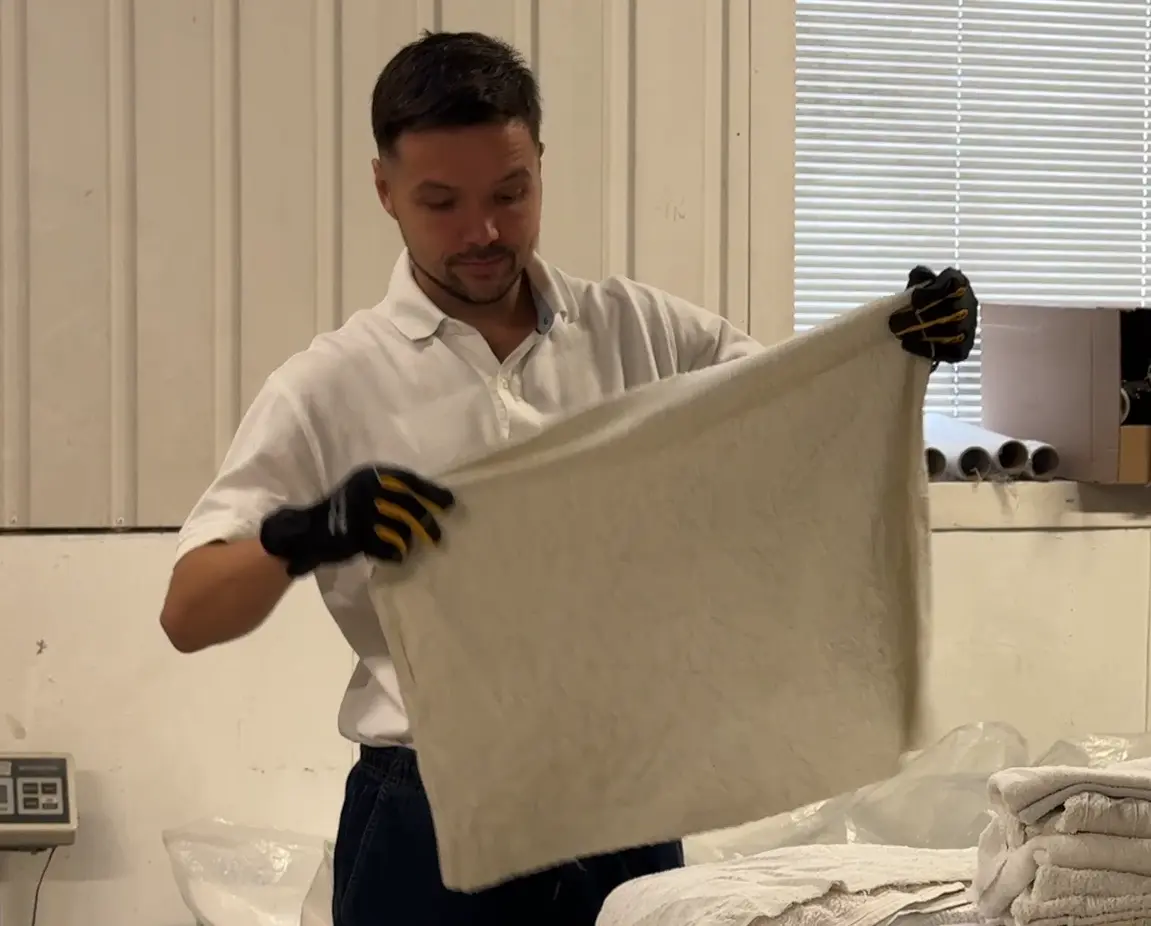
Texscale offers general-purpose wiping rags and absorbent wiping rags for different workshop cleaning tasks. Choose the grade around the contamination and surface rather than expecting one material to suit every job.
Keep clean supplies and contaminated waste separate
Store unused wiping materials where they will remain clean and dry. Place used materials in the container specified by your site’s waste procedure.
Cloths contaminated with flammable solvents need particular care. HSE’s fire-prevention guidance addresses the separate storage of flammable waste, including solvent-contaminated rags, in suitable closed, fire-resistant containers.
Disposal arrangements should reflect the substance on the cloth, not just the cloth material.
Make the checklist easy to follow
A useful checklist should fit the workshop’s actual working day. Keep it visible, assign responsibilities and check that staff can reach the supplies they need.
If a task is repeatedly missed, find out why. The answer may be a missing cleaner, unclear responsibility or an unrealistic cleaning window.
For help selecting wiping materials, tell Texscale about your workshop’s cleaning tasks, expected quantity and delivery location. That gives us a practical starting point for recommending a suitable grade.